

It is essential to know the initial situation in order to be able to assess the environmental impact of the project. For this reason, a database has been designed containing information on the quality and quantity of raw water in the abstraction points in the ten years prior to the project.
To analyse the effects of implementing the URBASO methodology on water quality and quantity, the catchment areas of the study abstraction points have been modelled. The model used is the Soil and Water Assessment Tool (SWAT), which was originally developed to assess the impact of management practices on water quality and quantity in large catchments. However, it has also been successfully applied to smaller-scale and forested catchments.
Field data, such as soil characteristics (soil type, texture, organic matter content, etc.) and vegetation parameters (species, age, leaf area index, etc.), contribute to a more realistic simulation of hydrological processes. Therefore, data on soil and vegetation, measured and analysed within the project, have been incorporated into the model.
For the calibration and validation process of streamflow and suspended sediments, monitoring data on water quality and quantity collected during the project have been used (action B3). Once the suitability of the model has been tested, the proposed land-use changes in the project (considering protection in the areas adjacent to the abstraction points) will be implemented in the tool to assess the long-term impact of the URBASO methodology on streamflow quality and quantity. Additionally, the model will help identify priority erosion areas and provide insight into hydrological processes at the catchment scale. Finally, future climate scenarios (Urbanklima 2050) will be incorporated into the model to study the resilience of the abstraction points to climate change.
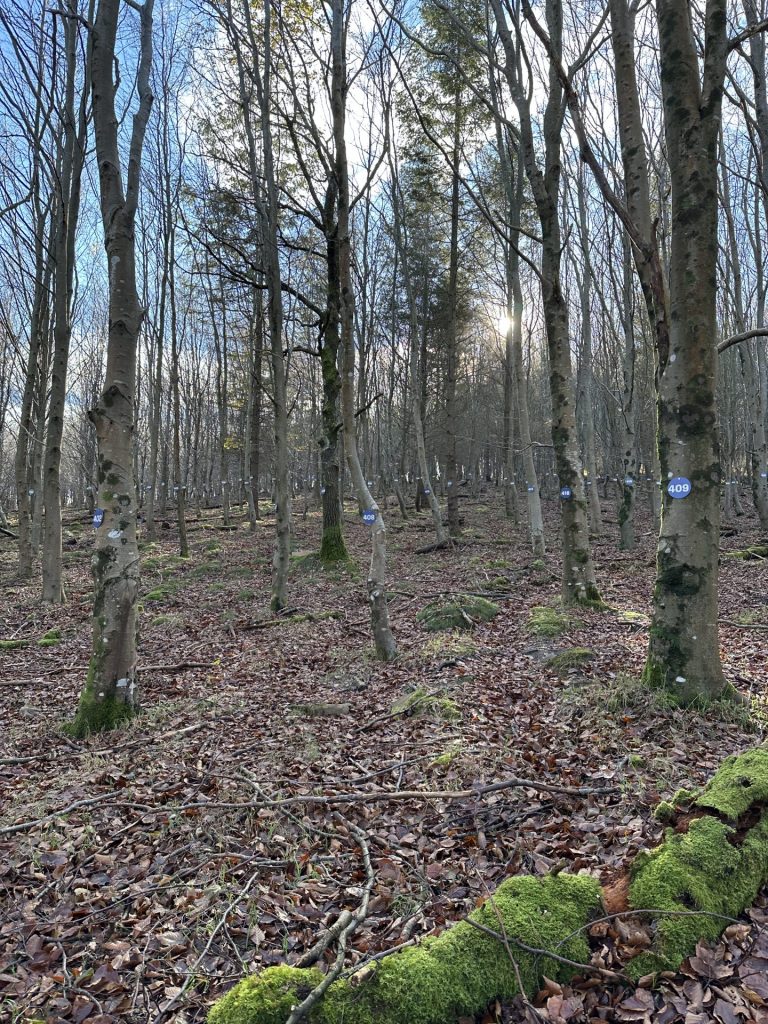
To better understand how the project’s actions affect biodiversity and climate resilience, a study on four of the best-preserved Quercus robur stands in the Basque Country was conducted, as these forests are the target of the implementation actions in LIFE URBASO. These remnant natural forests serve as key references for naturalness in degraded forest landscapes, offering valuable insights into the development processes of critical habitat elements that need to be restored in managed forests. This study helps assess the impact of the implemented methodology on biodiversity.
The results show that the mean age of the studied Quercus robur stands was 93 ± 17 years, whereas individual Q. robur trees can reach over 500 years in the Cantabrian Mountains of Spain. On average, four tree-related microhabitats (TreMs) per tree were observed, while the mean for temperate old-growth forests is nine TreMs per tree. In terms of deadwood carbon (C), temperate primary forests typically contain 33 Mg C ha⁻¹, whereas the studied stands had significantly lower values, averaging 10.5 ± 9 Mg C ha⁻¹. Benchmark soil organic carbon (SOC) stocks (97.5th percentile of ICP Forest plots at 1 m depth) for Acrisols, Cambisols, and Regosols in Europe are 446 Mg C ha⁻¹, 332 Mg C ha⁻¹, and 446 Mg C ha⁻¹, respectively. In this study, the observed values were considerably lower: 116, 137, and 159 Mg C ha⁻¹ for Acrisols, Cambisols, and Regosols, respectively.
The studied stands can be considered mature but not old-growth, as they lack key attributes of old-growth forests, such as advanced age, high TreM density, significant deadwood accumulation, and high SOC stocks. Although these forests require considerable time to develop old-growth characteristics, their protection could enhance their condition relative to regional averages and serve as important references for restoring naturalness in degraded forest landscapes.

See also: Oak_forests.pdf